


Last Updated: November 2, 2026
Quick Summary
The best alternatives to standard cotton hoodies are French terry, brushed fleece, cotton-polyester blends, and wool or hemp blends. French terry at 430 GSM is the strongest all-round swap, because it holds its shape, breathes better than fleece, and pills less than standard cotton fleece.
- French terry has smooth loops on the face and uncut loops on the back, so it drapes cleanly and resists slouching.
- Brushed fleece wins for static cold but holds moisture and heat once you start moving.
- A $120 heavyweight French terry hoodie worn three years costs about $40 per year.
- Midweight French terry of 350 to 400 GSM suits temperatures of 55 to 70°F.
- Ask for the GSM number and fiber content, since some retailers mislabel thin 250 GSM knits as French terry.
Table of Contents
- What Counts as an Alternative to a Standard Cotton Hoodie
- French Terry Hoodies Deliver Structure Without the Bulk
- Fleece vs. Cotton Hoodies: Weighing Warmth Against Breathability
- Why Heavyweight Cotton Hoodies Hold Their Shape Longer
- Cotton-Polyester Blend Hoodies and the Trade-Offs They Bring
- Comparing Materials Side by Side on Weight, Care, and Price
- Choosing the Right Hoodie for Your Climate and Routine
- Finding Your Next Hoodie at PrevailX
- Frequently Asked Questions
What Counts as an Alternative to a Standard Cotton Hoodie
An alternative to a standard cotton hoodie is any hooded sweatshirt built from a different fabric construction, fiber blend, or knit structure than the basic cotton fleece pullover most shoppers already own. In practice, the alternative has to change how the garment wears, drapes, insulates, or ages.
Most cotton hoodies on the market share one weakness. They start soft and end shapeless, because a loose cotton fleece knit stretches with wear and pills where it rubs. The alternatives worth your money fix that specific problem without turning the hoodie into a stiff jacket.
Below, we break down four real alternatives, compare them on weight, care, and price, and show you which one fits your climate and routine. But first, here is what most guides get wrong: they rank fabrics by softness alone. Softness fades. Structure is what keeps a hoodie in your rotation for years.
French Terry Hoodies Deliver Structure Without the Bulk
French terry is a knit fabric with smooth loops on the face and uncut loops on the back, which gives it a denser hand than brushed fleece without the trapped air that makes fleece bulky. That looped back is why French terry hoodies drape cleanly and hold a line across the chest and shoulders.
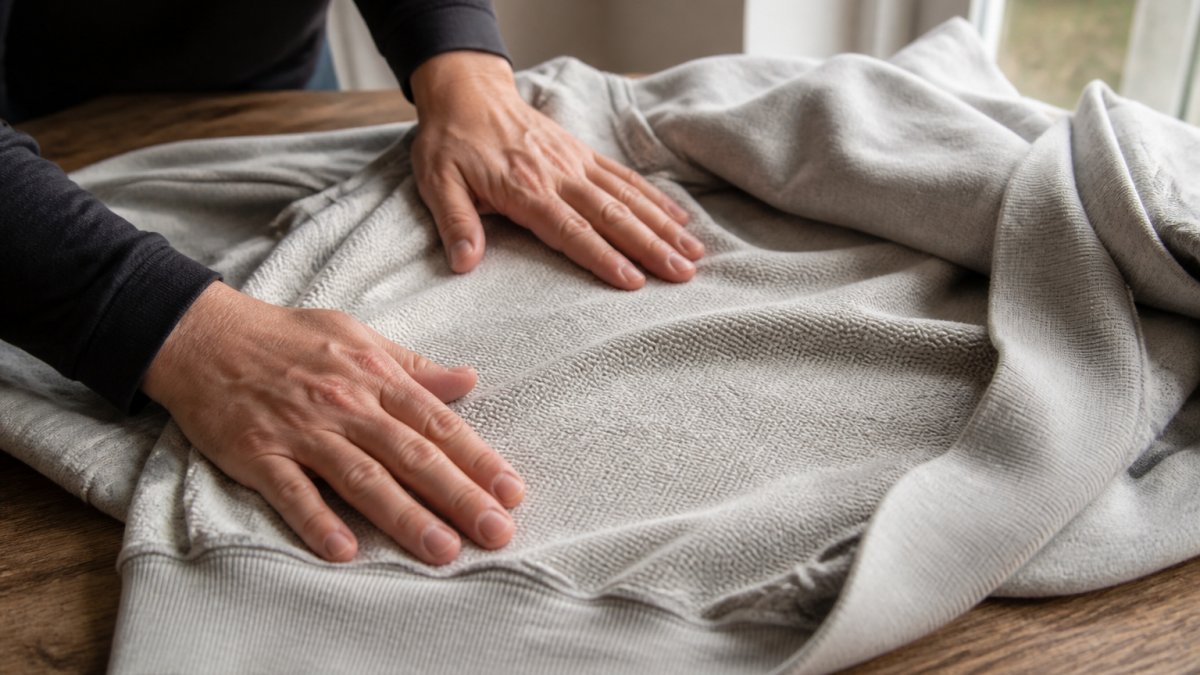
The weight matters more than the label. The 430 GSM French terry hoodie with side zippers is built from this kind of heavyweight French terry.

Fleece vs. Cotton Hoodies: Weighing Warmth Against Breathability
The fleece versus cotton hoodie question comes down to air. Brushed fleece traps warm air in a raised pile, so it feels warmer immediately but holds moisture and heat when you move. Standard cotton fleece behaves the same way, just with a shorter pile and faster pilling.
Fleece wins for static cold: sitting outdoors, a cold commute, a drafty room. Cotton and French terry win for anything active, because the fabric moves moisture instead of parking it against your skin.
| Fabric | Warmth | Breathability | Pilling Risk | Best For |
|---|---|---|---|---|
| Brushed fleece | High | Low | High | Cold, low-activity wear |
| Standard cotton fleece | Medium | Medium | High | Everyday casual |
| French terry 430 GSM | Medium-high | High | Low | Layering, all-day wear |
| Cotton-polyester blend | Medium | Medium | Medium | Budget, easy care |
A heavyweight French terry option balances both sides of that trade-off, which is why we point shoppers toward a 430 GSM French terry heavyweight hoodie when they want warmth without the sauna effect of fleece.

Why Heavyweight Cotton Hoodies Hold Their Shape Longer
Heavyweight cotton hoodies hold their shape because denser fabric resists the two forces that ruin lighter knits: gravity in the shoulders and friction at the cuffs and underarms. More grams per square meter means more fiber packed into each inch, so the garment recovers instead of stretching out.
This is the single most overlooked spec in hoodie shopping. A 430 GSM knit behaves like a different product from a 280 GSM one, even when both say "100% cotton" on the tag.
A common mistake is sizing up in a heavyweight hoodie to chase a relaxed fit. Dense fabric does not stretch into place the way thin cotton does. Buy your normal size and let the weight do the draping.
Cotton-Polyester Blend Hoodies and the Trade-Offs They Bring
Cotton-polyester blend hoodies trade natural texture for easy care. The polyester adds wrinkle resistance, speeds drying, and lowers cost, which is why so many budget hoodies use a 60/40 or 50/50 blend. The cotton keeps it from feeling slick.
The trade-offs are real. Blends pill differently than pure cotton, they can hold odor longer because polyester traps oils, and the hand feel is flatter than ring-spun or combed cotton. Tri-blend fabrics, which add rayon to the mix, feel softer but stretch more and lose shape faster.
Where blends win is price and laundry tolerance. If a hoodie is going to live in a gym bag and get washed twice a week, a blend survives that routine better than a delicate knit.
For shoppers weighing whether the material upgrade justifies the spend, our guide on whether luxury clothing is worth the price walks through that calculation honestly.
Comparing Materials Side by Side on Weight, Care, and Price
Most hoodie guides rank fabrics by softness and stop there. Softness is the least useful comparison point, because it fades fastest.
Here is how the main alternatives stack up on those criteria. The ranges below reflect common commercial constructions, not outliers.
| Fabric | Typical weight (GSM) | Warmth | Breathability | Drying time | Pilling risk | Shrinkage | Care burden |
|---|---|---|---|---|---|---|---|
| Standard cotton fleece | 280-350 | Medium | Medium | Moderate | High | Moderate to high | Machine wash cold, low heat |
| Brushed fleece (poly or cotton) | 250-350 | High | Low | Slow | High | Low to moderate | Low heat only; pile mats with heat |
| French terry | 300-450 | Medium to high | High | Fast | Low | Low if pre-shrunk | Machine wash cold, hang dry |
| Cotton-polyester blend | 280-350 | Medium | Medium | Fast | Medium | Low | Tumble dry low; odor retention risk |
| Wool or wool blend | 250-400 | High | High | Moderate | Low to medium | Low with care | Hand wash or wool cycle, flat dry |
| Hemp or hemp-cotton | 250-380 | Medium | High | Moderate | Low | Moderate on first wash | Softens with wear; machine wash cold |
| Recycled polyester blend | 250-350 | Medium | Medium | Fast | Medium | Low | Easy care; check for microfiber shedding |
How to read the table. Weight is not the same as warmth.
Prevailx Luxury Graffiti Black Hoodie | 430 GSM French Terry with Zippers →
Pilling and shrinkage are the two failure modes to price in. Standard cotton fleece pills where it rubs, cuffs, underarms, the sides of the torso, because short staple fibers work loose. French terry pills less because the looped structure holds fibers in place. Cotton shrinks most on the first wash; pre-shrunk French terry and blends move less.
Price per year of wear is the only fair cost comparison. Divide the purchase price by the number of years you expect to wear the garment.
Use this table as a filter, not a verdict. The right fabric depends on whether you prioritize warmth, breathability, easy care, or longevity, and the next section maps those priorities to climate and routine.
Choosing the Right Hoodie for Your Climate and Routine
Most hoodie advice stops at "pick a midweight for spring." That is not a decision framework. A useful guide maps three variables, temperature range, activity level, and layering role, to a specific fabric and construction.
Step 1: Set your temperature band. Think about the conditions where you will actually wear the hoodie, not the extremes.
- Above 70°F: A lightweight French terry (300-350 GSM) or a hemp-cotton blend. Skip fleece entirely; brushed pile becomes a sauna above 70°F once you move.
- 55-70°F: Midweight French terry (350-400 GSM) is the sweet spot. It layers over a tee without bulk and breathes enough for walking or commuting.
- 40-55°F: Heavyweight French terry (400-450 GSM) or a wool blend. This is where structure matters, a dense knit holds its shape under a jacket without bunching at the shoulders.
- Below 40°F: Brushed fleece or a wool blend as a midlayer, not an outer layer. Fleece wins for static cold (sitting outdoors, a cold commute); wool wins if you will be moving and sweating.
Step 2: Match the activity. Activity level determines whether you need breathability or insulation.
- Low activity (lounging, commuting, sitting outdoors): Brushed fleece or heavyweight cotton fleece. Trapped air is an asset when you are not generating heat.
- Moderate activity (walking, errands, travel): French terry. It moves moisture instead of holding it, so you do not overheat when you pick up the pace.
- High activity (gym warmups, outdoor work, hiking): Midweight French terry or a wool blend. Avoid brushed fleece, it holds sweat and odor. Cotton-polyester blends dry fast but can retain odor because polyester traps oils.
Step 3: Define the layering role. A hoodie worn as an outer layer needs structure; a hoodie worn under a jacket needs low bulk.
- Outer layer: Heavyweight French terry (430 GSM) or a structured cotton fleece. The fabric weight does the draping, so buy your normal size rather than sizing up.
- Midlayer: Midweight French terry or a thin wool blend. Look for a smooth face that slides under a jacket without friction.
- Standalone travel piece: French terry wins because it dries faster than fleece and resists pilling in a duffel bag.
A four-season shortcut. If you want one hoodie to cover the most calendar days, a 430 GSM French terry pullover covers more range than three lighter hoodies. It layers over a tee in shoulder seasons, works as a midlayer under a shell in cold, and breathes enough for mild active wear. The trade-off is that it is too warm above 70°F for most people.
Watch out: buying for style first and climate second is the most common purchase mistake.
If you are still narrowing the field, our curated guide to the best luxury hoodies for men compares silhouettes and use cases in one place.
Finding Your Next Hoodie at PrevailX
The hoodie you keep reaching for is the one built from fabric dense enough to hold its shape and honest enough to tell you its weight. That is the standard we build to at PrevailX.
Our collection centers on 430 GSM French terry, a heavyweight knit. Leather accents on select pieces add a quiet mark of craftsmanship. Orders over $150 ship free.
Start with the Graffiti Black hoodie at $120 for an everyday structured layer, or move to the Brown French terry hoodie with leather accents at $135 when you want the fabric and the detailing to carry the piece.
Get started with PrevailX and replace the hoodie that lost its shape with one built to keep it.
Frequently Asked Questions
Are there any 100% cotton hoodies that still feel premium?
Yes. Premium 100% cotton hoodies exist, but the fabric weight and knit matter more than the fiber alone. Look for heavyweight cotton fleece or French terry in the 400 GSM range, which gives a structured drape and resists pilling better than thin 250 GSM cotton. Ring-spun and combed cotton versions feel softer and shrink less. PrevailX builds its hoodies from 430 GSM French terry, a heavyweight knit.
Is French terry better than fleece for a hoodie?
It depends on how you wear it. French terry has a smooth face and a looped back, so it breathes better and works across more seasons. Brushed fleece traps more heat and feels cozier in cold weather but pills faster with heavy wear. For year-round everyday wear and layering under a jacket, French terry hoodies usually win. For deep winter lounging, fleece has the edge.
Are heavyweight cotton hoodies more durable than standard hoodies?
Generally yes. A heavier knit like 430 GSM French terry uses more yarn per square meter, so the fabric resists stretching, thinning, and seam stress better than a light 250 to 300 GSM cotton hoodie. Heavier fabric also holds its shape through repeated washing. The trade-off is a higher price and a longer break-in period before the hoodie softens.
Is a 50% cotton 50% polyester hoodie bad?
Not bad, just different. Cotton-polyester blend hoodies cost less, shrink less, and dry faster than pure cotton. The downside is breathability: polyester traps heat and odor, and the fabric can pill where it rubs. Blends work well for gym layers and budget everyday wear. If comfort and airflow matter more, a heavyweight cotton or French terry hoodie is the better pick.
What should I look for when choosing a hoodie fabric?
Check four things: fabric weight in GSM, fiber content, knit type, and construction details. A 400 GSM or higher weight signals durability. French terry or heavyweight fleece beats thin jersey. Look for flatlock or reinforced seams, a sturdy ribbed hem, and a hood with a double-layer panel. These details decide whether a hoodie lasts two seasons or ten.


