

Last Updated: November 9, 2026
Quick Summary
French terry fabric is a knit textile with a smooth face and looped back that balances comfort and structure better than almost any other knit. Its loop structure moves moisture, allows airflow, and resists pilling, making it ideal for layering and transitional weather. Choose it for a cleaner look and better breathability than fleece.
- French terry has uncut loops on the back, while fleece is brushed into a fuzzy pile.
- Under 250 GSM is lightweight, 250 to 350 GSM is midweight, and 350 to 450 GSM is heavyweight.
- Look for flatlock or coverstitch seams and ribbed cuffs with 2 to 5 percent spandex.
- Pure cotton French terry can shrink after the first wash; blends hold their size better.
- Select PrevailX pieces are made from 430 GSM French terry with genuine leather accents on some styles.
Table of Contents
- What Is French Terry Fabric and Why It Matters
- What Is French Terry Made Of
- The Core Benefits of French Terry Fabric Explained
- Is French Terry Warm Enough for Cold Weather?
- Is French Terry Fabric Good for Summer?
- French Terry vs Fleece: Which Should You Choose?
- GSM, Construction, and What to Look For
- Choosing a Premium French Terry Hoodie
- Frequently Asked Questions
What Is French Terry Fabric and Why It Matters
French terry fabric is a knit textile with a smooth face and looped back, and understanding it changes how you shop for premium casual wear. Heavyweight hoodies and sweaters are often built from this material because it helps solve a common shopping problem: finding a garment that feels substantial without making you overheat.
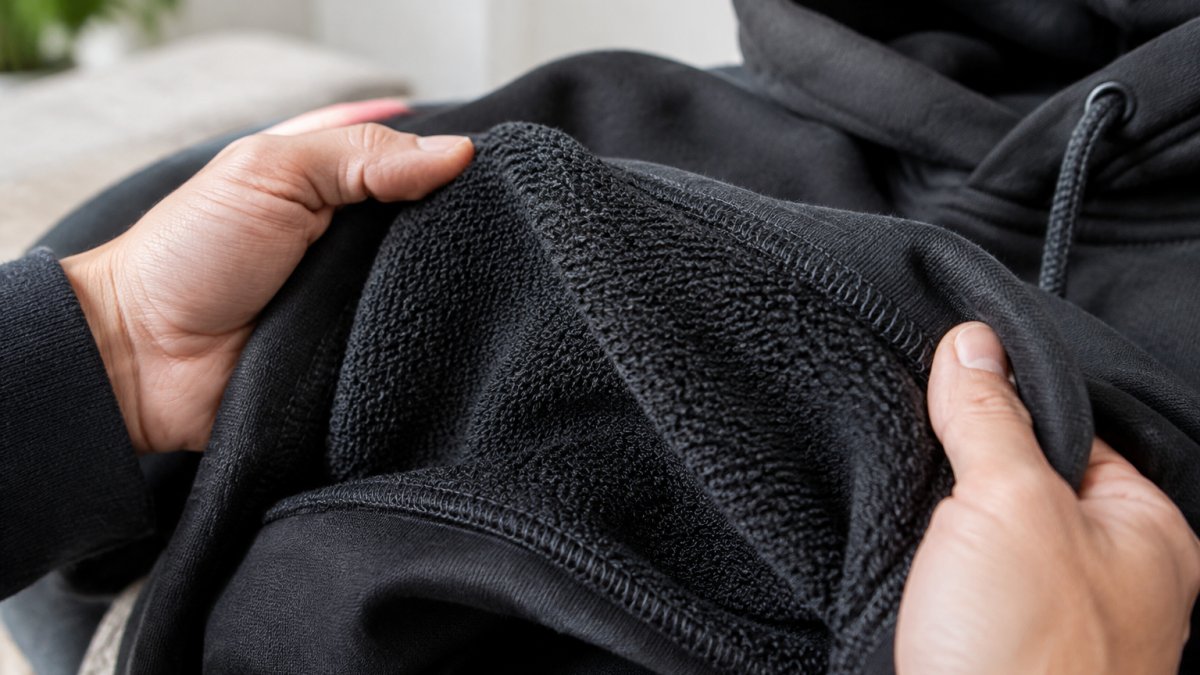
The construction is what separates it from ordinary sweatshirt material. One side is flat and clean. The other side carries uncut loops, similar to a towel but far finer. That loop structure traps a little air for warmth while allowing moisture to move away from your skin.
Fabric choice is a major factor in whether a piece keeps its shape over time. Below, we explain the benefits, how French terry compares to fleece, and what specifications to check before you spend money.
What Is French Terry Made Of
Most French terry is a cotton blend, often with a small amount of polyester or spandex added for stretch and recovery. The exact recipe determines how the fabric drapes, how much it shrinks, and how well it holds its shape over time.
- Cotton: provides softness, breathability, and natural absorbency
- Polyester: adds durability and helps the garment resist pilling
- Spandex: contributes stretch and recovery so cuffs and hems spring back
Pure cotton French terry feels wonderful but can shrink after the first few washes. A blend with a modest synthetic component tends to hold its size better. When you read a product description, look for the fiber percentages rather than just the word "cotton."
The Core Benefits of French Terry Fabric Explained
The benefits of French terry fabric explained in plain terms come down to one idea: it balances comfort and structure better than almost any other knit. The smooth outer face gives a polished look, while the looped back delivers softness against the skin without the bulk of brushed fleece.
That combination makes it unusually versatile. A well-made French terry hoodie reads as elevated casual wear rather than gym clothing. It works over a t-shirt on a cool evening and under a jacket in winter.
Moisture-Wicking and Breathability
French terry moves moisture rather than trapping it. The loop structure creates small channels that let air circulate and allow sweat to evaporate, which is why the fabric feels comfortable during light activity and in transitional weather.
Compared with brushed fleece, which can feel clammy once you warm up, French terry's looped structure generally allows more airflow.
Softness, Stretch, and Durability
The looped back gives French terry its softness without a fuzzy surface that pills quickly. Knit construction provides natural stretch, and a small spandex content helps the garment recover its shape after wear.
Durability depends largely on fabric density. A heavier, denser knit resists stretching at the elbows and knees. Lighter versions feel pleasant at first but tend to lose structure faster.
Is French Terry Warm Enough for Cold Weather?
French terry is warm enough for cool weather and mild winter layering, but it is not a substitute for insulated outerwear. Its warmth comes from the loop structure and fabric weight, not from a brushed or filled lining.
For a cold commute, a heavyweight French terry hoodie worn under a coat works well. For freezing temperatures on their own, you will want something heavier. The key variable is GSM, which we cover below.
Is French Terry Fabric Good for Summer?
French terry fabric is good for summer evenings, air-conditioned spaces, and travel, though a lightweight version suits hot days better than a heavy one. Its breathability keeps it from feeling stifling, and the smooth face looks neat in casual settings.
For peak summer heat, choose a lighter weight. A heavy 430 GSM knit is better suited to spring, fall, and layered winter wear than to a July afternoon.
French Terry vs Fleece: Which Should You Choose?
French terry and fleece differ in their back surface: French terry has uncut loops, while fleece is brushed to create a fuzzy pile. That single difference drives most of the practical trade-offs between them, warmth, breathability, pilling, and how each fabric ages.
| Feature | French Terry | Fleece |
|---|---|---|
| Back surface | Uncut loops | Brushed pile |
| Breathability | Higher | Lower |
| Warmth | Moderate | Higher |
| Pilling risk | Lower | Higher |
| Moisture handling | Moves sweat away | Can feel clammy |
| Best for | Layering, transitional weather | Deep cold, lounging |
The Mechanism Behind the Difference
Fleece is made by brushing the looped back of a knit until the fibers tease up into a soft pile. That pile traps a layer of still air, which is why fleece feels warmer immediately. The trade-off is that brushed fibers are shorter and more prone to tangling into pills, and the dense pile reduces airflow so sweat has nowhere to go.
French terry skips the brushing step. The uncut loops stay intact, creating small channels that let air circulate and moisture evaporate. The result is a fabric that feels substantial without the clammy sensation fleece can develop once you warm up.
How They Perform Across Seasons and Activities
- Cool evenings and transitional weather: French terry wins. It layers cleanly under a jacket and looks polished on its own.
- Deep cold and lounging: Fleece wins on raw warmth, especially for low-activity wear.
- Light activity and commuting: French terry keeps you drier; fleece can overheat once you start moving.
- Long-term appearance: French terry resists pilling better, so it tends to look newer for longer.
Choose French terry when you want a cleaner look and better breathability. Choose fleece when maximum warmth matters more than airflow. For a deeper comparison of premium options, our guide to the best luxury hoodies for men walks through construction and value in detail.
GSM, Construction, and What to Look For
GSM stands for grams per square meter, and it is the clearest single indicator of fabric weight and density. A higher GSM generally means a heavier, more structured garment that holds its shape and feels more substantial in the hand. But GSM alone does not tell the whole story: two fabrics at the same weight can behave very differently depending on loop height, yarn size, and how tightly the knit is finished.
Here is how to read GSM when you shop:
- Under 250 GSM: lightweight, best for summer and travel
- 250 to 350 GSM: midweight, good for year-round layering
- 350 to 450 GSM: heavyweight, structured and warm
- Above 450 GSM: very heavy, best for cold climates and outerwear-style hoodies
Why Two 400 GSM Fabrics Can Feel Different
GSM measures mass per area, not thickness or density. A fabric can hit 400 GSM with tall, loose loops that feel plush but compress quickly, or with shorter, tighter loops that feel firmer and resist stretching. Yarn size matters too: finer yarns knit into a smoother, denser surface, while thicker yarns create a loftier hand with more air inside the structure.
When evaluating a product page, a single GSM number with no fiber content or construction details is a limited specification on its own.
Construction Checks That Predict Longevity
Fabric weight means little if the seams fail first. Look for these details on the inside of the garment:
- Flatlock or coverstitch seams at shoulders, armholes, and side seams. These stretch with the knit and lie flat, reducing bulk and abrasion.
- Ribbed cuffs and hems with spandex (often 2 to 5 percent) so openings spring back instead of stretching out.
- Twin-needle stitching on hems for a clean finish that resists curling.
- Consistent loop texture on the back, uneven loops signal skipped stitches or poor tension control.
- Reinforced pocket bags and hood seams on hoodies, since these are the first points to pull apart.
Shrinkage and Recovery
Cotton French terry can shrink after the first wash, especially in pure-cotton versions. A blend with a modest polyester or spandex component tends to hold its size better, and pre-shrunk or garment-washed fabrics reduce the surprise. Check the care label for "pre-shrunk" or "garment washed" language.
A concrete example of a heavyweight build is the Prevailx Luxury Graffiti Black Hoodie, crafted from 430 GSM heavyweight French terry.

Choosing a Premium French Terry Hoodie
Choosing well comes down to three checks: fabric weight, fiber content, and construction quality. Get those right and a hoodie will hold its shape and look sharp for years rather than one season.
Select PrevailX pieces are made from 430 GSM French terry, and some styles feature genuine leather accents. If you want to see how a heavyweight knit should feel and drape, browse our hoodie collection to compare colorways and details. Before investing, it also helps to weigh whether luxury clothing is worth the price for your wardrobe. And if you have questions about sizing or availability, you can always contact us directly.
The real challenge is finding a heavyweight hoodie that keeps its structure without feeling stiff. PrevailX INC builds ours from 430 GSM French terry with precise stitching, genuine leather accents on select styles, and free shipping on orders over $150. Get started with PrevailX INC and invest in a piece that holds its shape and its meaning.
Frequently Asked Questions
What are the advantages of wearing French terry fabric?
French terry fabric offers a rare balance of softness, breathability, and durability. Its looped back absorbs moisture while the smooth face keeps a clean look, so it works for both casual wear and layering. Heavier weights like 430 GSM add structure to a garment.
Is French terry fabric good for summer or winter?
French terry fabric works in both seasons, which is why it appears in athleisure and casual wear year-round. In summer, the looped back and cotton blend allow air circulation and moisture-wicking, so it feels comfortable in warm weather. Heavier GSM weights are generally better suited to cooler weather than lighter ones.
How warm is French terry compared with fleece?
French terry is generally lighter and less insulating than fleece because its back is looped rather than brushed. Fleece traps more air for warmth but can feel bulky and less breathable. French terry vs fleece comes down to use: fleece suits cold-weather lounging, while French terry offers thermal regulation and breathability for active or transitional days.
What is French terry fabric made of, and does it shrink?
French terry is typically a cotton or cotton blend knit, often with a small percentage of polyester or spandex for stretch and recovery. Pure cotton versions offer softness and absorbency but can shrink after the first wash, so pre-shrunk or blended fabrics are common.


