


Last Updated: November 19, 2026
Quick Summary
The best GSM for durable everyday t-shirts is 160-180 GSM in 100% cotton, a range that balances feel, durability, and printability. For more structure and longevity, 200 GSM sits comfortably in the durable everyday zone, while 240 GSM adds premium body and shape retention.
- GSM measures fabric weight per square meter, not quality, so treat it as a starting point.
- Lightweight tees run 120-160 GSM and suit hot climates and layering.
- Midweight 160-220 GSM is the everyday workhorse for daily wear and printing.
- Heavyweight fabric at 220 GSM and up resists pilling and holds a boxy silhouette.
- A 250 GSM tee feels closer to a light sweatshirt and is a stretch for year-round rotation.
Table of Contents
- What GSM Really Tells You About a T-Shirt
- T-Shirt Fabric Weight Guide: Lightweight, Midweight, and Heavyweight
- Is a 200 GSM T-Shirt Durable Enough for Everyday Wear?
- The 240 GSM T-Shirt: Where Structure Meets Comfort
- Is a 250 GSM T-Shirt Too Heavy for Daily Wear?
- Durability Beyond GSM: Yarn, Knit, and Finishing
- Choosing the Best GSM for Your Climate and Wardrobe
- Your Buying and Inspection Checklist Before You Commit
- Frequently Asked Questions
What GSM Really Tells You About a T-Shirt
GSM, or grams per square meter, measures fabric weight: how much one square meter of cloth weighs. (T-Shirt Fabric Weight Guide) A higher number means denser, heavier fabric; a lower number means lighter, thinner cloth. That single figure shapes how a tee feels, drapes, and holds up.
Here is the part most guides gloss over: GSM tells you weight, not quality. GSM is best treated as a starting point, not a verdict. Two 200 GSM shirts can wear completely differently depending on yarn and knit.
A 100% cotton T-shirt in the 160-180 GSM range is a solid everyday option balancing feel, durability, and printability, according to US Apparel Wholesale's fabric weight guide. Below, we break down every weight class so you can pick with confidence.
T-Shirt Fabric Weight Guide: Lightweight, Midweight, and Heavyweight
This t-shirt fabric weight guide sorts the market into three practical tiers. Each tier suits different wear, climates, and fits.
Lightweight: 120-160 GSM
Lightweight cotton feels airy and dries fast. It works for hot weather and layering, but thin fabric shows wear sooner. Expect more transparency in lighter colors and a looser drape.
Midweight: 160-220 GSM
Midweight is the everyday workhorse. The Easson Apparel weight map identifies 180-220 GSM as a starting range that balances comfort, cost, and printability. It holds shape through regular laundering and takes screen printing cleanly.
Heavyweight: 220 GSM and Up
Heavyweight fabric feels substantial and structured. It resists pilling and holds a boxy silhouette. The trade-off is warmth and stiffness, which matters in humid climates.
| Weight Class | GSM Range | Best For | Watch Out For |
|---|---|---|---|
| Lightweight | 120-160 | Hot climates, layering | Transparency, faster wear |
| Midweight | 160-220 | Daily wear, printing | Little |
| Heavyweight | 220+ | Structure, longevity | Warmth, stiffness |
Is a 200 GSM T-Shirt Durable Enough for Everyday Wear?
Yes. A 200 GSM t-shirt sits comfortably in the durable everyday zone. The fabric is dense enough to resist thinning and holds its shape through repeated washing, yet stays breathable enough for daily wear.
What most guides miss is that 200 GSM lands at the upper end of midweight, where structure and comfort overlap. It is not a compromise pick. It is often the smartest one for someone who wears the same tee three days a week.
The 240 GSM T-Shirt: Where Structure Meets Comfort
A 240 GSM t-shirt is where fabric starts to feel genuinely premium. The cloth has body, drapes cleanly, and keeps a crisp shoulder line all day. Structured or boxy tees are often built in the 200-240 GSM range.
This is the weight range our own PrevailX 260 GSM Signature Black on Black T-Shirt lives in, just above the mark. At $60, it uses dense knit cotton with a leather logo accent, and the extra weight is exactly why it holds its silhouette from morning to evening.

Best for: anyone who wants a tee that reads as elevated, not basic. Skip if: you run hot or want a loose, breezy summer shirt.
Is a 250 GSM T-Shirt Too Heavy for Daily Wear?
Not too heavy, but noticeably heavier. A 250 GSM T-shirt feels substantial and warm, closer to a light sweatshirt than a classic tee. For cool weather, office layering, or structured fits, it works beautifully.
For midsummer afternoons, it can feel like too much. The right call depends on your climate and how you plan to wear it. If you want one tee for year-round daily rotation, 250 GSM is a stretch. If you want a statement piece for cooler months, it is excellent.
Durability Beyond GSM: Yarn, Knit, and Finishing
Weight alone does not make a shirt last. Yarn quality, knit density, and finishing all affect how a tee survives real wear.
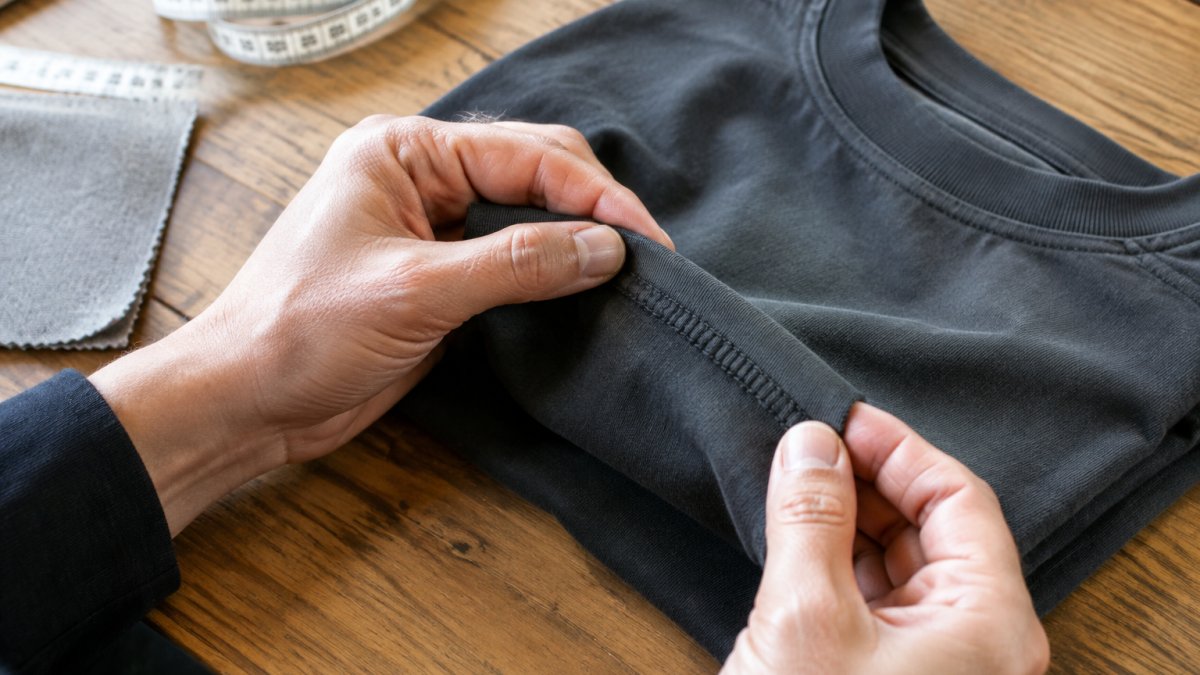
Yarn quality. Ring-spun and combed cotton yarns are generally smoother than open-end yarns, and the yarn type can affect how a shirt holds up over time.
Knit structure. Single jersey is the standard tee knit: light, stretchy, and prone to curling at the edges. Interlock and double-knit fabrics are denser and more stable, which is why they hold shape better at the same weight. Ribbed knits at the collar are commonly used to help the neckline recover.
Stitching and assembly. Double-needle stitching at the hem and sleeves, reinforced shoulder seams, and side seams (rather than tubular construction) all add lifespan. Tubular tees have no side seam, which reduces seam failure but limits fit and can twist after washing. Check whether the collar is set with a separate rib band and taped neck seam; those two details do more for shape retention than an extra 20 GSM.
Finishing. Pre-shrunk and garment-dyed fabrics behave differently over time. Pre-shrunk cotton holds its size better through the first few washes; garment-dyed cotton may continue to shrink slightly and fade intentionally. Mercerized cotton is stronger and takes dye more deeply, which helps colorfastness. None of these are visible on a GSM label, which is why the number alone cannot answer the durability question.
Wash-and-wear checks you can run at home. After the first three washes, look for five failure signals: shrinkage at the hem and sleeve length, pilling under the arms and at the collar, seam twisting along the side, color fading at the shoulders, and collar roll. A tee that passes all five after ten washes is a durable everyday shirt regardless of its GSM. A tee that fails two or more is not, no matter what the spec sheet says.
Measurement caveats. GSM is usually measured on finished fabric, but suppliers vary in whether they report greige weight or finished weight, and tolerances of a few percent are normal. That means a listed 200 GSM shirt may arrive closer to 190 or 210. Treat GSM as a band, not a precise promise, and weigh it alongside fiber content, knit type, and seam construction.
If you are weighing whether a heavier, better-built tee justifies its price, our guide on whether luxury clothing is worth the price breaks down the markers that matter. The short version: pay for yarn, knit, and finishing before you pay for weight.
Choosing the Best GSM for Your Climate and Wardrobe
The best GSM for you depends on where you live, how you dress, and what the shirt is made of. There is no universal winner, and any guide claiming otherwise is oversimplifying. The useful move is to match fabric weight to the conditions you actually wear the tee in, then adjust for fiber and knit.
What those discussions rarely spell out is why the same GSM behaves differently across climates. The mechanism is simple: fabric weight sets how much air and moisture the cloth can move, but knit structure and fiber content set how fast it moves them. A 180 GSM open-knit cotton jersey breathes very differently from a 180 GSM tightly knit interlock, even though the scale reads the same.
Hot, humid conditions (roughly 150-180 GSM). Lightweight single jersey in the 150-180 GSM range moves heat and moisture fastest. Look for combed or ring-spun cotton with a visible, slightly open knit. Fiber content also affects how a tee feels in humid air, since cotton and cotton-polyester blends handle moisture differently.
Mild, four-season conditions (roughly 180-220 GSM). This is the year-round band for most people. A 190-200 GSM midweight jersey has enough density to hold its shape through repeated laundering without trapping heat on a warm afternoon. If you wear the same tee to the office and on weekends, 200 GSM is the safer anchor than 180 GSM because it resists collar roll and hem twist longer.
Cool conditions and layering (roughly 220-260 GSM). Heavier fabric traps more warm air and holds a structured silhouette under a jacket. A 240 GSM tee works as a light outer layer in spring and fall and as a base layer in winter. The trade-off is stiffness and dry time: a 250 GSM shirt takes longer to air-dry after a wash, which matters if you rotate a small wardrobe.
Printing and embroidery (roughly 180 GSM and up). Heavier fabric is often used for screen printing and embroidery applications. If the shirt will carry a heavy print, favor 200 GSM or above and confirm the knit is tight enough that the ink sits on the surface rather than sinking in.
Oversized and relaxed fits. A boxy cut uses more fabric per panel, so a 200 GSM oversized tee can feel as substantial as a 240 GSM slim tee. If you want the structured, architectural look that oversized tees are sold on, aim for 220-240 GSM in a relaxed cut rather than 180 GSM in an oversized cut, which tends to collapse at the shoulders after a few washes.
A practical way to decide is to pick the climate band first, then adjust one step heavier for structure or one step lighter for breathability.
Your Buying and Inspection Checklist Before You Commit
Run this checklist before you buy any tee. It catches the issues GSM alone cannot.
- Check the GSM label, then feel the fabric in hand
- Stretch the hem gently and watch how fast it recovers
- Inspect seams for double stitching and even tension
- Hold fabric to light to check for transparency
- Confirm fiber content: 100% cotton or a labeled blend
- Review care instructions for shrinkage guidance
- Check the return policy before committing
A common mistake is buying on GSM alone and ignoring construction. The best GSM for durable everyday t-shirts is the one backed by solid yarn, tight knit, and honest finishing.
The global T-shirt market reached $30.68 billion in 2026 and is projected to hit $44.81 billion by 2035, according to Printful's market figures, which means more options than ever and more reason to choose carefully. At PrevailX INC, we build tees in that structured 260 GSM range, with dense knit cotton and leather-accented details designed to hold their shape for years. Browse the collection and find the weight that fits your wardrobe.
Frequently Asked Questions
What is the best GSM for a durable everyday t-shirt?
Most buying guides point to the 180-220 GSM range as a practical starting point for everyday wear, balancing comfort, cost, and printability. For a denser, more structured feel that holds its shape through repeated washing, 240-260 GSM works well. The best GSM depends on your climate and fit preference, so use weight as one signal alongside yarn quality, knit density, and seam construction.
Does higher GSM make a t-shirt last longer?
Not automatically. Heavier fabric usually feels more substantial and resists show-through, but longevity also depends on yarn quality, knit tightness, stitching, and how you wash it. A well-constructed 200 GSM tee with reinforced seams can outlast a loosely knit 240 GSM shirt. Check seam construction, collar ribbing, and fabric density alongside the GSM number before you buy.
Is a 240 GSM t-shirt good or bad for everyday wear?
A 240 GSM t-shirt sits in the heavyweight category and suits people who want a structured, boxy silhouette that holds its shape. It is a solid choice for cooler months and layering. In hot, humid weather it can feel warm, so lighter 160-200 GSM options may be more comfortable for summer daily wear.
Is a 250 GSM t-shirt too heavy for everyday wear?
A 250 GSM t-shirt is on the heavier end but still wearable daily, especially if you prefer a substantial feel and a drape that does not cling. It works well as a standalone piece in spring and fall. If you run warm or live in a hot climate, a 200 GSM or lighter tee will feel more breathable for all-day wear.


