


Quick Summary
Mass produced clothing is made in large batches from standard patterns and sizes, usually in a single factory run. You can spot it by checking fabric weight and recovery, inspecting inside seams and stitching, testing hardware, reading the label, and noting how the brand describes its stock and lead times.
- Mass produced clothing is cut from one pattern in identical batches and sewn on lines where each worker handles one step.
- Pinch the fabric and release it; good fabric springs back, while low-cost fabric stays creased or saggy.
- Turn the garment inside out and check for even stitching, reinforced stress points, and a clean seam allowance.
- Run zippers and tug buttons, snaps and rivets to confirm the hardware is firmly attached.
- Treat price as a weak tiebreaker, since a high price can come with weak seams and a modest one with solid construction.
Table of Contents
- What Mass-Produced Clothing Means and How It Is Made
- Mass-Produced vs. Made-to-Order Clothing: Telling the Models Apart
- A Step-by-Step Checklist for Inspecting a Garment
- How to Identify Quality in Clothing Beyond Visual Clues
- Reading Clothing Labels and Country of Origin
- Where Small-Batch Clothing Fits and Whether Price Tells You Anything
- Putting the Checklist to Work on Your Next Purchase
- Frequently Asked Questions
What Mass-Produced Clothing Means and How It Is Made
Last Updated: November 14, 2026
Mass-produced clothing is made in large batches, often in the same factory run, using standard patterns and sizes. Most of the clothing sold in American stores falls into this category. Knowing how it is made gives you a better starting point for judging any garment you pick up.
Mass production usually means cutting many identical pieces from a pattern, then sewing them on lines where each worker handles one step. The goal is volume and a low cost per unit. Quality can still be good, but the process is built around speed and scale.
Much of this mass produced clothing is made overseas, where labor costs are lower. That origin is a fact about the supply chain, not a verdict on any single shirt.
Fast fashion is a term for the fastest version of this model. Brands release new styles every few weeks and keep prices low to match.
Mass-Produced vs. Made-to-Order Clothing: Telling the Models Apart
Made-to-order clothing is cut and sewn after a customer buys it. Small-batch clothing is made in short runs, often a few dozen pieces at a time. Both models usually produce less waste than mass production, because they make fewer extra units.
The difference shows up in how the brand talks about its product. Made-to-order brands often state a lead time before shipping. Small-batch brands may mention limited quantities or numbered drops. Mass-market brands rarely describe how many pieces were made.
Here is a quick way to compare the two:
| Clue | Mass-Produced | Small-Batch or Made-to-Order |
|---|---|---|
| Availability | Stocked in many stores | Limited drops or pre-order |
| Lead time | Ships in days | Often several weeks |
| Sizing | Standard sizes only | Sometimes custom or limited sizes |
| Price pattern | Frequent markdowns | Steady pricing, fewer sales |
None of these clues proves how a garment was made. They are signals to weigh alongside what you see and feel in the piece.
A Step-by-Step Checklist for Inspecting a Garment
Use this checklist in order whenever you shop in person. It takes about two minutes per piece and moves from the checks that reveal the most to the ones that reveal the least. Online, ask for close-up photos of seams, labels, and hardware before you buy.
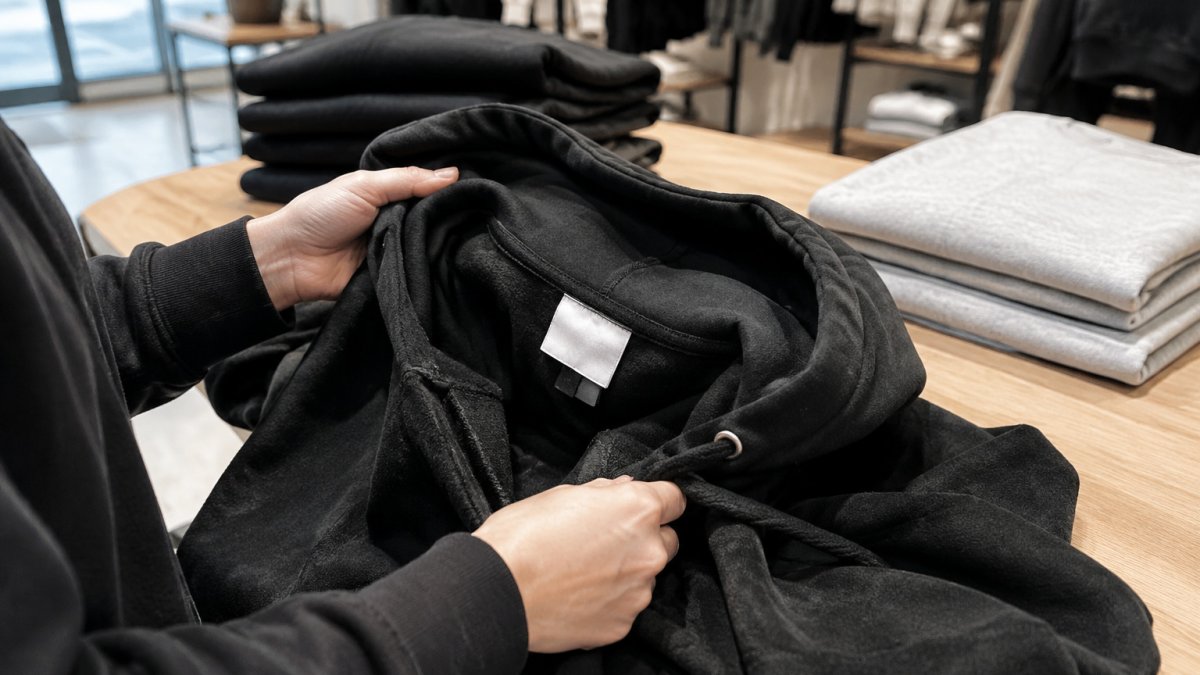
- Feel the fabric weight and recovery. Pinch a section and release it. Good fabric springs back; low-cost fabric stays creased or saggy.
- Turn the garment inside out and inspect seams. Look at the seam allowance, stitch density, and whether stress points are reinforced.
- Test the hardware. Run zippers, tug buttons, and check that snaps and rivets sit flush.
- Read the label for fiber content, care, and origin. Note what the label establishes and what it does not.
- Compare price to verifiable materials and construction. Price is the weakest signal; treat it as a tiebreaker, not a verdict.
Checking Fabric Weight and Recovery
Start with fabric because it sets the ceiling on durability. Heavier knits feel dense and hold their shape when you pinch them; thin fabric that sags or lets light through often points to lower-cost production. Weight is sometimes listed in GSM (grams per square meter), so rely on hand feel and recovery.
A practical test: stretch a small section of the fabric across the grain and let go. It should snap back without leaving a distorted area. Rub the surface briskly with your thumb; excessive pilling or fuzzing right off the rack is a warning sign. Check the fiber content on the label too, since natural fibers and blends behave differently in the wash and over time.
Watch out: a soft hand feel is not the same as durability, and some finishes that make fabric feel smooth initially can mask weak fibers.
Examining Seams, Stitching, and Hardware
Turn the garment inside out. Look for even stitch lines, a clean seam allowance, and reinforced seams at stress points like shoulders, underarms, and crotch. Neat finishing inside is hard to fake and is one of the most reliable visual clues you have. Check for loose threads, skipped stitches, and seams that pucker or pull.
Next, test the hardware. Zippers should run smoothly without catching, and buttons, snaps, and rivets should feel firmly attached. Leather accents should sit flat and be cleanly stitched rather than glued on loosely. On denim, check that rivets and bar tacks are present at pocket corners.
What This Checklist Can and Cannot Prove
These checks tell you about construction quality and likely durability. They do not tell you how many units a factory run produced. A garment can be mass-produced and well made, or small-batch and poorly finished. Treat the checklist as evidence about the garment in your hands, not as proof of production scale. For scale, look for brand disclosures about production volume, factory partners, or drop sizes.
How to Identify Quality in Clothing Beyond Visual Clues
Looks can be misleading. A garment can seem well made on the rack and still wear out fast. That is why it helps to look at how it holds up over time.
Ask how the piece behaves after a few washes. Ask whether it keeps its shape, color and fit. You can often learn this from customer reviews that mention wear over months, not days.
Watch out: price alone does not prove quality. A high price can still come with weak seams, and a modest price can come with solid construction. Judge the materials and construction first.
Reading Clothing Labels and Country of Origin
Labels are the most misunderstood evidence on a garment. They can establish fiber content, care requirements, and where final assembly happened, but they cannot tell you production volume, factory conditions, or durability on their own. Read them as one data point among several.
Fiber content. This tells you what the garment is made of, not how well it was made. A 100% cotton tee can be excellent or flimsy depending on yarn quality and knit density. Use fiber content to predict care needs and hand feel, then verify quality with the fabric and seam checks.
Care instructions. These tell you how to keep the garment in shape and hint at how demanding it will be. A garment that requires hand washing or dry cleaning carries ongoing cost and effort. Follow the care label, but also note that some low-cost garments carry generic instructions that do not match real-world behavior.
Country of origin. This shows where final assembly happened, not where the fabric was made or where the brand is based. Many well-made garments are assembled abroad, and some domestic items are not built to last. Origin alone does not decide quality.
What labels usually omit. Most labels do not state production volume, factory identity, or whether the style is mass-produced or small-batch. If a brand publishes that information elsewhere, treat it as stronger evidence than any label. If it does not, rely on the construction checks and on how the brand describes its drops and lead times.
Watch out: a label that says "designed in" a country does not mean the garment was made there, and a high fiber percentage does not guarantee good yarn or construction.
Where Small-Batch Clothing Fits and Whether Price Tells You Anything
Small-batch clothing sits between mass production and fully custom work. You often get better materials and more care in each piece, though you pay more and choose from fewer options.
Price can hint at production scale, but it is a weak signal on its own. Compare what you are paying against the materials and construction you can actually verify. A higher price is worth it only if the fabric weight, seams and hardware justify it.
Putting the Checklist to Work on Your Next Purchase
Take the checklist with you the next time you shop. Start with the fabric, then the seams, hardware, label and price. Note which clues matter most to you.
Our PrevailX Luxury 430 GSM Brown French Terry Heavy Weight Hoodie with Leather Accents is one example of a heavyweight piece to test this method on. For a wider look at options, see our Best Luxury Hoodies for Men 2026 guide.
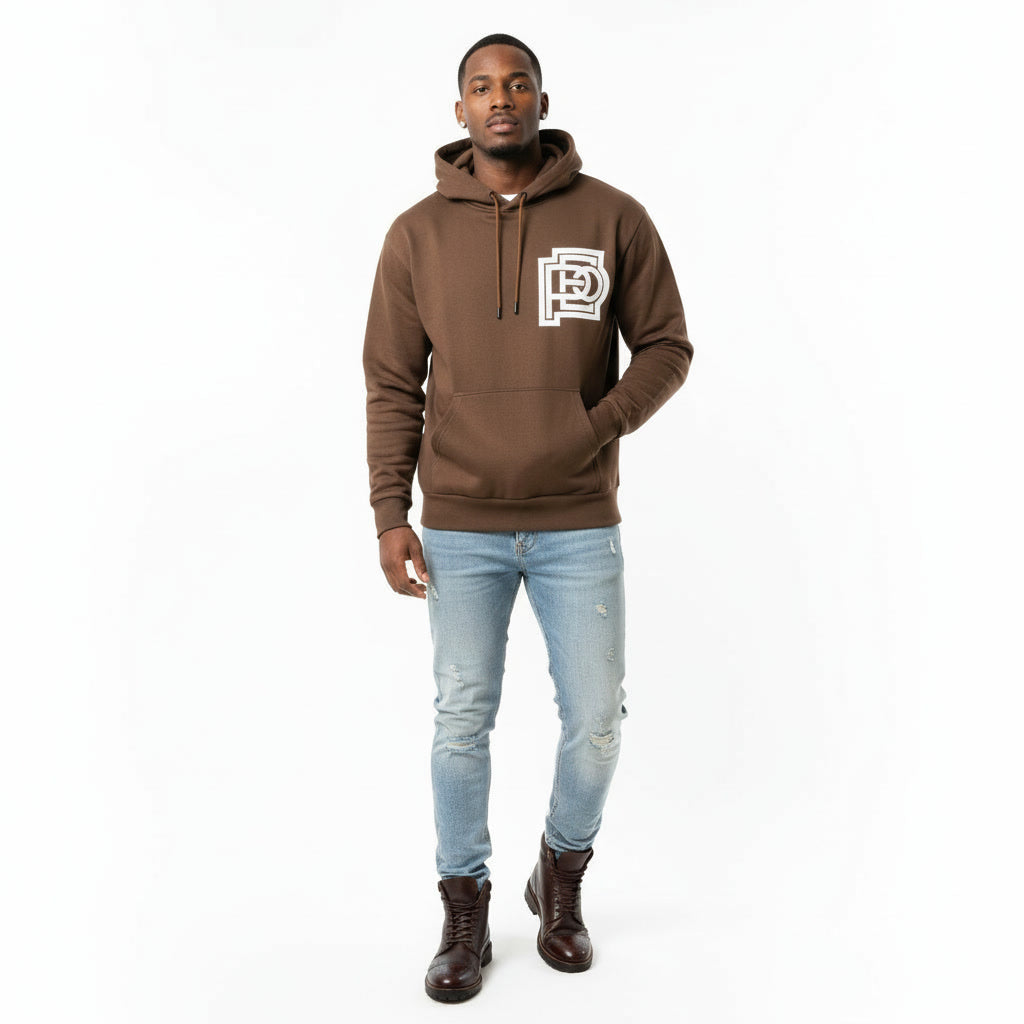
Choosing clothing you can trust takes a little practice. At PrevailX INC, we built our pieces around heavyweight French terry and careful finishing so you can judge them for yourself. Start with the fabric and seams, and see how the piece feels to you.
Frequently Asked Questions
How can you tell if clothing is mass-produced?
No single visual clue proves that a garment is mass-produced. Mass-produced pieces often show repeated identical sizing, uniform stitch patterns, lightweight fabric and generic hardware, but high-end factories and small studios can produce the same features. The most reliable approach combines several checks: examine the fabric weight and composition, look at seam finishing and stitch density, read the care and origin labels, and ask the brand directly about its production volume and sourcing. Treat visual signs as clues rather than proof.
What should you look for on clothing labels?
Start with the fiber content, which tells you whether the fabric is natural, synthetic or a blend. Then check the care instructions, since clothing that needs special handling often signals higher-quality materials. The country-of-origin label shows where the garment was finished, but it does not reveal how many units were made. Use labels as one input alongside fabric and construction checks.
Does a high price mean clothing is not mass-produced?
No. A high price does not guarantee small-batch production, and many premium brands manufacture in large runs. Price reflects materials, labor, brand positioning and margin as well as production scale. A $135.00 heavyweight hoodie from PrevailX, for example, is built from 430 GSM French terry with leather accents, so you can judge its value by those specifications rather than by price alone. Compare fabric weight, construction and finishing before deciding whether the cost is justified.
What is the difference between mass-produced and small-batch clothing?
Mass-produced clothing is manufactured in high volumes, often with identical garments across many sizes and colorways, and it is typically made to forecast demand. Small-batch clothing is produced in limited runs, sometimes made to order, which can allow more attention to individual pieces. Small-batch production does not automatically mean better quality, so verify fabric, construction and finishing directly rather than assuming.


