


Last Updated: November 16, 2026
Quick Summary
To remove pilling from heavy cotton sweaters, lay the garment flat and work in small sections with light, short strokes using a fabric shaver on tight smooth knits or a sweater comb on textured knits. Test any tool on a hidden area first, and stop when the surface looks even rather than pressing hard.
- Test your chosen tool on a hidden spot like the inside hem before treating visible areas.
- Hold a fabric shaver flat against the fabric and move in one direction with light pressure.
- Use a sweater comb instead of a shaver on cable, ribbed, or textured knits and near seams.
- Skip blades entirely on brushed, bouclé, or slub knits, snags, and thinning fabric.
- Turn sweaters inside out, wash cold, and skip the dryer to slow future pilling.
Table of Contents
- Why Heavy Cotton Sweaters Pill (and What That Fuzz Really Is)
- How to Remove Pilling From Sweaters at Home: The Step-by-Step Method
- Using a Fabric Shaver on a Heavy Cotton Sweater
- When a Sweater Comb Beats a Shaver
- Scissors, Lint Rollers, and Sticky Tape: What Actually Works
- Telling Pills Apart From Texture and Loose Fibers
- Cotton Sweater Pilling Prevention That Lasts
- Choosing a Heavyweight Sweater Built to Resist Pilling
- Frequently Asked Questions
Why Heavy Cotton Sweaters Pill (and What That Fuzz Really Is)
Those little balls of fuzz on your favorite sweater are not a sign of cheap fabric.
Here is the simple version: a fabric pill is a tiny knot of loose fibers that have rubbed against something and rolled into a ball. It sits on the surface.
Heavy cotton pills for three reasons:
- Short fibers. Cotton is spun from staple fibers, and shorter ones escape the yarn more easily.
- Friction. Underarm rub, seatbelts, bag straps, and chair backs all create it.
- Washing and drying. Tumble drying agitates fibers and loosens them faster than air drying.
Tape and adhesive methods can pull loose fibers out of a knit and make pilling worse over time. Treat tape as a last resort, not a first move.
If you are weighing whether a pricier sweater is worth it, our guide to whether luxury clothing is worth the price walks through what fabric weight and construction actually buy you.
How to Remove Pilling From Sweaters at Home: The Step-by-Step Method
The safest way to remove pilling from heavy cotton sweaters is slow, sectioned, and gentle. Rushing is what causes holes. Follow these steps and you protect the knit while you restore the surface.
Step 1: Prep and Test a Hidden Area
Lay the sweater flat on a clean, well-lit surface. Smooth the fabric so the pills stand up.
Then test. Pick a spot no one sees, like the inside hem. Try your tool there first.
Watch out: working on a sweater that is stretched over your hand or a hanger distorts the knit and makes it easy to catch a thread.
Step 2: Work in Small Sections, Gently
Divide the sweater into zones: sleeves, underarms, chest, back, hem. Finish one zone before moving on.
Use light, short strokes. Let the tool do the work. Pressing hard does not remove pills faster. It just pulls more fibers loose.
Check your progress every few passes. The goal is a smooth surface, not a bald patch.
Using a Fabric Shaver on a Heavy Cotton Sweater
A fabric shaver can be a fast option for a heavy cotton knit. These small electric tools trim pills with a rotating blade behind a protective guard.
How we would use one:
- Lay the sweater flat and smooth the section you are working on.
- Hold the shaver flat against the fabric, not tilted.
- Move in one direction with light pressure.
- Empty the lint chamber when it fills, so the blade keeps cutting.
- Stop when the surface looks even.
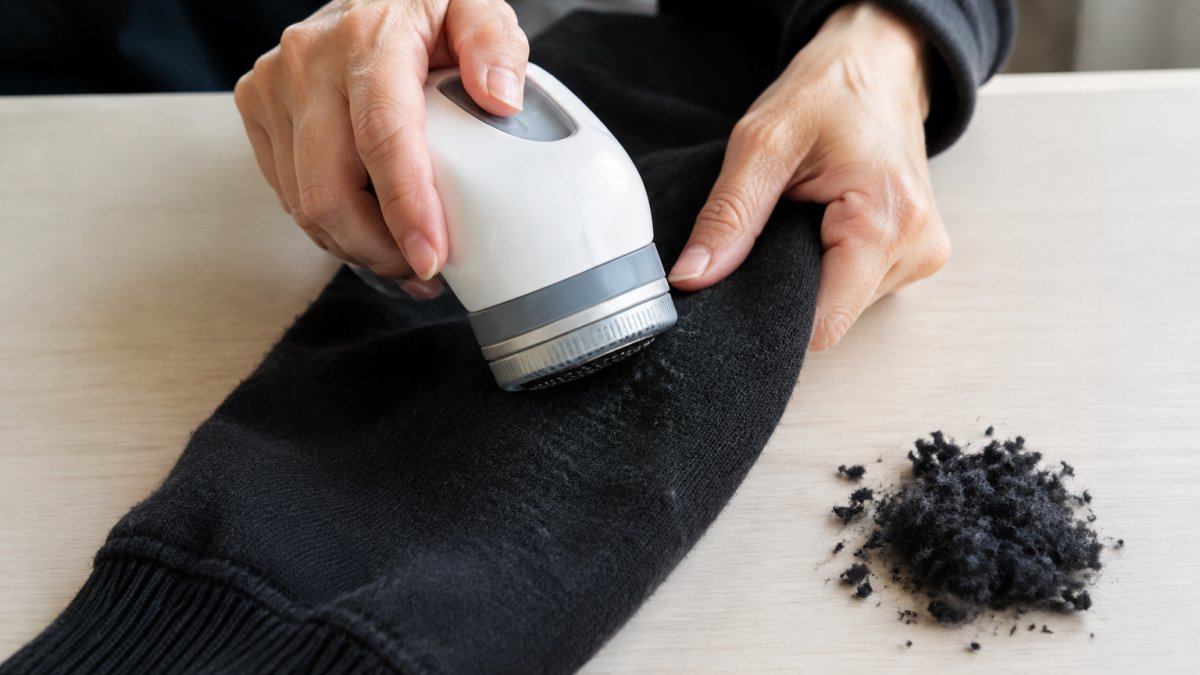
Where it falls short: a shaver can catch on loose threads, seams, and leather trims. Keep the blade away from any leather logo or zipper detail.
When a Sweater Comb Beats a Shaver
A sweater comb wins when you want control. It is a small handheld comb with fine teeth that lifts pills off the surface without a blade.
Reach for the comb instead of the shaver when:
- The knit is textured, cable, or ribbed
- You are working near seams or trims
- You want to depill while watching TV, with zero setup
The trade-off is speed. A comb takes longer, and it works best on smaller pill clusters.
For a chunky sweater, comb in one direction and lift the tool away between strokes. Dragging it back and forth just pushes pills around.
Scissors, Lint Rollers, and Sticky Tape: What Actually Works
Small scissors, lint rollers, and sticky tape all have a place, but only when matched to the right job. On a heavy cotton sweater, the wrong tool does more harm than good, so use this decision guide before you reach for anything.
Match the Tool to the Pill and the Knit
Start by judging three things: how big the pills are, how tight the knit is, and whether the surface is smooth or textured.
- Tight, smooth knit with large, dense pills. A fabric shaver is the efficient choice. The dense cotton surface can take the blade guard without distorting.
- Tight, smooth knit with a few stray pills. Small scissors or a sweater comb. Snip or lift each pill at its base rather than dragging a tool across the whole surface.
- Textured, cable, or ribbed knit. A sweater comb only. A shaver can flatten raised stitches and leave a bald track you cannot repair.
When Not to Use a Blade or Shaver
Skip the shaver and scissors entirely when:
- The knit is brushed, bouclé, slub, or otherwise intentionally raised. You will cut the design, not the pills.
- You see a snag or a pulled loop. Cutting it turns a repairable snag into a hole.
- The fabric is thinning in one area. A shaver removes surface fibers, and on a worn spot there may be nothing left to spare.
- The sweater has leather trim, a zipper, or embroidered details near the pills. Keep blades away from those zones.
How the Methods Compare
| Method | Best For | Speed | Risk to Fabric |
|---|---|---|---|
| Fabric shaver | Large areas on tight, heavy cotton | Fast | Medium near seams, trims, and loose threads |
| Sweater comb | Textured knits, small areas, seams | Slow | Low |
| Small scissors | A few stray pills on smooth knit | Very slow | Low if you snip, not pull |
| Lint roller | Loose lint and surface fuzz | Fast | Low |
| Sticky tape | Emergency touch-ups | Fast | Can loosen fibers and worsen pilling over time |
Working Around Seams, Ribbing, and Raised Textures
On a heavy cotton sweater, the highest-risk zones are the ones where the knit changes structure. At seams, the fabric is doubled and the blade can catch the ridge.
Switching to a comb or scissors for the last inch before any seam or rib, and keeping the shaver on the flat body panels, reduces the risk of catching the knit.
Watch out: pulling a pill with your fingers instead of cutting or lifting it stretches the yarn and can leave a permanent distorted spot in the knit.
Telling Pills Apart From Texture and Loose Fibers
Not every bump on a sweater is a pill. Before you reach for a tool, know what you are looking at.
- Pills are dense, round, and attached at a single point. They roll between your fingers.
- Intentional texture is part of the knit. Slub yarns, bouclé, and brushed finishes all have a raised surface by design.
- Loose fibers are long and wispy. They lie flat and do not form balls.
Test one spot with your fingers. If it rolls into a ball, it is a pill. If it is part of the pattern, leave it alone. Shaving a textured knit can flatten the design and leave a bald patch you cannot fix.
Cotton Sweater Pilling Prevention That Lasts
Prevention for heavy cotton is different from prevention for wool. Cotton fibers are shorter and less crimped, so they escape the yarn more readily under friction, and a heavy garment creates more of its own rub pressure. The habits below target those two mechanisms directly.
Wash and Dry to Protect the Yarn
- Turn the sweater inside out before washing. The outside face takes the abrasion in the machine, and reversing it puts the wear on the inside surface instead.
- Use cold water and a gentle cycle. Heat and agitation both loosen short fibers. A mesh laundry bag adds a layer of protection if your machine has an aggressive drum.
- Skip the dryer entirely. Tumble drying is the single fastest way to raise a fuzzy halo on cotton. Lay the sweater flat on a drying rack, reshape it while damp, and let it air dry away from direct heat.
- Wash less often than you think. Cotton sweaters can go several wears between washes if you air them out and spot-clean. Every wash cycle is friction.
Reduce Friction During Wear and Storage
- Fold, do not hang. Hangers stretch the shoulders and create rub points where the sweater meets the bar. Folding keeps the knit's shape and removes that pressure.
- Rest between wears. Give the sweater a day off so the fibers can recover their position in the yarn.
- Watch the high-friction zones. Underarms, seatbelt paths, bag straps, and chair backs are where pills form first. A light scarf or a different bag carry can reduce rub in those spots.
- Store folded with breathing room. Cramming sweaters together creates friction every time you open the drawer. A shelf or drawer with a little space between garments is better than a packed stack.
A Realistic Expectation
Depilling removes surface fibers, but it cannot reverse wear. A heavy cotton sweater that has pilled once will likely pill again in the same high-friction zones over time. The goal is management, not a permanent cure: regular, gentle removal plus the friction-reduction habits above will keep the surface looking even far longer than occasional deep cleanings.
Watch out: storing a damp or unwashed sweater in a closed drawer traps moisture and friction together, which accelerates both pilling and odor.
Choosing a Heavyweight Sweater Built to Resist Pilling
The best defense against pilling is a tightly knit, heavy fabric. Denser yarns shed fewer short fibers, and a heavier garment holds its shape instead of rubbing against itself.
That is the thinking behind our Prevailx black-on-black 430 GSM French terry sweater. If you prefer a lighter colorway, the Prevailx Crème sweater with navy leather accents uses the same heavyweight construction.


A quick checklist before you buy any heavy cotton sweater:
- Fabric weight is listed and it is heavy, not vague
- The knit looks tight and even, with no fuzzy halo
- Seams and trims are finished cleanly
- Care instructions match how you actually launder
Pilling is manageable, but prevention beats repair every time. At PrevailX INC, we build sweaters from 430 GSM French terry with a smooth, dense surface that resists the friction that causes pills.
Frequently Asked Questions
Is 100% cotton prone to pilling?
Yes. Cotton fibers are short compared with wool or synthetic filaments, so they work loose from the yarn and tangle into pills when rubbed. Heavy cotton sweaters pill most where friction hits: under the arms, along the sides, and where a bag strap rests. The weight of the fabric slows the process but does not stop it. Regular, gentle removal and washing inside out keep pills from building up.
Can you use a fabric shaver on a cotton sweater?
You can, and it is the fastest option for a heavy cotton knit. Lay the sweater flat on a hard surface, stretch the area slightly, and run the fabric shaver in one direction with light pressure. Keep the blade head moving so you do not gouge one spot. Test on an inside seam first, and stop before the surface looks thin. A sweater comb is the safer pick for loose or textured knits.
Is a sweater comb or fabric shaver safer for cotton?
A sweater comb is gentler because it lifts pills off the surface rather than cutting them. It suits chunky, textured, or loosely knit cotton where a blade could catch a loop. A fabric shaver is faster and cleaner on smooth, tight heavy cotton like French terry.
How can you prevent a cotton sweater from pilling again?
Wash the sweater inside out in cold water on a gentle cycle, and skip the dryer, which adds friction and heat. Let it air dry flat. Give it a rest day between wears so fibers recover, and store it folded rather than on a hanger. Run a sweater comb over friction zones every few wears so small pills never grow into matted patches.


