

Last Updated: November 7, 2026
Quick Summary
The best fabric weights for winter hoodies range from midweight to heavyweight, roughly 350 to 430 GSM, with about 10 oz per square yard as a practical midpoint. Heavier fabrics give more warmth and wind resistance, while lighter weights suit layering and milder days. Match the weight to your climate, activity level and layering needs.
- Fabric weight matters more than style for winter warmth and wearability.
- GSM and oz/yd² measure density, not warmth, so construction matters too.
- 1 oz/yd² equals roughly 33.9 GSM, so 10 oz is about 339 GSM.
- Dry cold favors heavier fleece at 400 GSM and up for insulation.
- Damp cold favors 350 to 400 GSM French terry paired with a water-resistant outer layer.
Table of Contents
- Why Fabric Weight Matters More Than Hoodie Style in Winter
- How Hoodie Fabric Weight Is Measured: Ounces, GSM and Ounces Per Square Yard
- The 5 Best Fabric Weights for Winter Hoodies, Ranked
- Winter Hoodie GSM Guide: Matching Weight to Climate, Activity and Layering
- French Terry vs. Fleece Hoodie: Construction, Warmth and Seasonal Use
- Midweight vs. Heavyweight Hoodie: Which Weight Fits Your Winter
- Choosing Your Winter Hoodie: Shop the 430 GSM PrevailX Collection
- Frequently Asked Questions
Winter hoodies live or die on fabric weight, not just on how the hood fits or what the logo looks like, so checking the fabric weights before anything else is the smartest move. A hoodie that feels thin in January will leave you cold no matter how good the cut is. Choosing the right weight is the single fastest way to get a hoodie that actually works through a cold season. At PrevailX INC, we build our collection around 430 GSM French terry, which sits in the heavyweight range that most winter buyers need.

Fabric weight describes how much material is packed into a given area. It affects warmth, drape, durability and how the hoodie feels against your skin. Here are the five weights that cover most winter use, ranked from lightest to heaviest, with the tradeoffs for each.
Why Fabric Weight Matters More Than Hoodie Style in Winter
Style decides how a hoodie looks. Weight decides whether you wear it. A heavyweight piece in a simple cut will outperform a fashionable hoodie made from thin fleece every time the temperature drops. Two hoodies that look similar can feel completely different on a cold day, and fabric weight is a large part of why.
Fabric weight also controls how a hoodie layers. Heavier cloth holds its shape under a jacket and resists wind more effectively, while lighter cloth works better as a base or on milder days. Start with weight, then choose the style around it.
How Hoodie Fabric Weight Is Measured: Ounces, GSM and Ounces Per Square Yard
Hoodie weight is usually given in one of three units, and understanding what each one actually measures is the difference between buying the right weight and guessing. Grams per square meter (GSM) is the most common unit in premium apparel and is standard across most international fabric mills. Ounces per square yard (oz/yd²) is the standard in much of the US apparel trade, and you will also see ounces written as shorthand for the same measurement. A higher number always means a heavier, denser fabric per unit of area.
The critical distinction competitors often skip: these numbers measure mass per area, not warmth. A 400 GSM cotton fleece and a 400 GSM French terry weigh the same per square yard but insulate differently because of how the fabric is finished. Weight tells you density and drape; construction and fiber content tell you warmth. Use weight as your first filter, then check construction.
For practical comparison, here is the conversion most buyers need: 1 ounce per square yard equals roughly 33.9 GSM. That means 10 oz/yd² is about 339 GSM, 12 oz/yd² is about 407 GSM, and 14 oz/yd² is about 475 GSM. If a listing gives only ounces, a rough guide is that heavier hoodie fabric in the 10 to 14 ounce range sits well into winter territory. If a listing gives only GSM, anything from about 340 GSM upward is in the same winter-capable zone.
Watch out: supplier measurements are not always directly comparable. Some brands list fabric weight from the mill spec sheet, while others list finished garment weight after washing, shrinkage, or added trims. A hoodie labeled 400 GSM from one brand may feel lighter than a 380 GSM hoodie from another if the first was measured before finishing. Always check whether the spec refers to fabric weight or garment weight, and when in doubt, compare within a single brand's lineup rather than across brands.
You do not need to convert between units to shop well. Just compare hoodies using the same unit and the same measurement basis. Always check the spec sheet before you buy, and treat any weight claim without a stated unit or measurement basis as marketing rather than specification.
The three common units compare as follows, so you can read any listing without converting.
| Unit | What it measures | Conversion |
|---|---|---|
| GSM | Grams per square meter | Most international mills |
| oz/yd² | Ounces per square yard | Standard in US apparel trade |
| 1 oz/yd² | Equals roughly 33.9 GSM | 10 oz ≈ 339 GSM |
| 12 oz/yd² | Roughly 407 GSM | Winter-capable zone |
| 14 oz/yd² | Roughly 475 GSM | Heavy winter range |
The 5 Best Fabric Weights for Winter Hoodies, Ranked
1. Lightweight Fleece (Around 250 to 300 GSM)
Lightweight fleece is the warmth-to-weight option for mild winters. It is soft, breathable and easy to layer under a coat. Fleece is a common choice for colder weather, and brushed fleece feels softer against the skin.
Pros: Light, breathable, comfortable for active use, packs down well. Cons: Less wind resistance and less insulation than heavier options. Pills more easily over time. Best for: Cool autumn days, indoor-outdoor transitions, and layering under a heavier jacket.
2. Midweight Cotton Fleece (Around 10 oz)
At roughly 10 ounces, midweight cotton fleece is the everyday winter workhorse. It holds shape, feels substantial, and handles most cold-weather days without the bulk of a true heavyweight piece.
Pros: Balanced warmth and comfort, holds shape well, good for daily wear. Cons: Can feel warm in heated indoor spaces. Less insulating than heavier options. Best for: Daily commuting in temperate winter climates and cold-weather errands.
3. Midweight French Terry (Around 350 GSM)
French terry has looped fabric on the inside and a smooth face on the outside. At around 350 GSM, it offers a clean look with more body than standard jersey. It is a good choice when you want a structured hoodie that still breathes.
Pros: Smooth exterior, substantial feel, versatile across seasons. Cons: Less warmth than fleece at the same weight. Can stretch out if the weight is too light. Best for: Transitional winter days and buyers who want a polished look.
4. Heavyweight Cotton Fleece (400 GSM and Up)
Once you move past 400 GSM, the hoodie starts to behave like real winter outerwear. Heavyweight cotton around 400 GSM and up is the range where a hoodie starts to work as real winter outerwear.
Pros: Strong insulation, wind resistance, durable under frequent wear. Cons: Heavier to carry, slower to dry, can feel bulky under a coat. Best for: Cold, dry climates and outdoor winter activity.
5. Heavyweight French Terry (430 GSM)
This is the weight PrevailX INC uses across its collection. The 430 GSM French terry used in our hoodies combines a structured drape with substantial warmth. Our Graffiti Black and Graffiti Crème hoodies are both built in this weight, with functional side zippers for added versatility. Each is priced at $120.00.

Pros: Substantial warmth with a polished, structured look. Holds its shape across repeated wear. Cons: Heavier than midweight options and can run warm in mild conditions. Best for: Serious winter wear, cold climates, and buyers who want a luxury heavyweight piece.
This heavyweight French terry delivers substantial warmth with a structured, polished look.
Winter Hoodie GSM Guide: Matching Weight to Climate, Activity and Layering
Most winter hoodie guides treat winter as one condition. It is not.
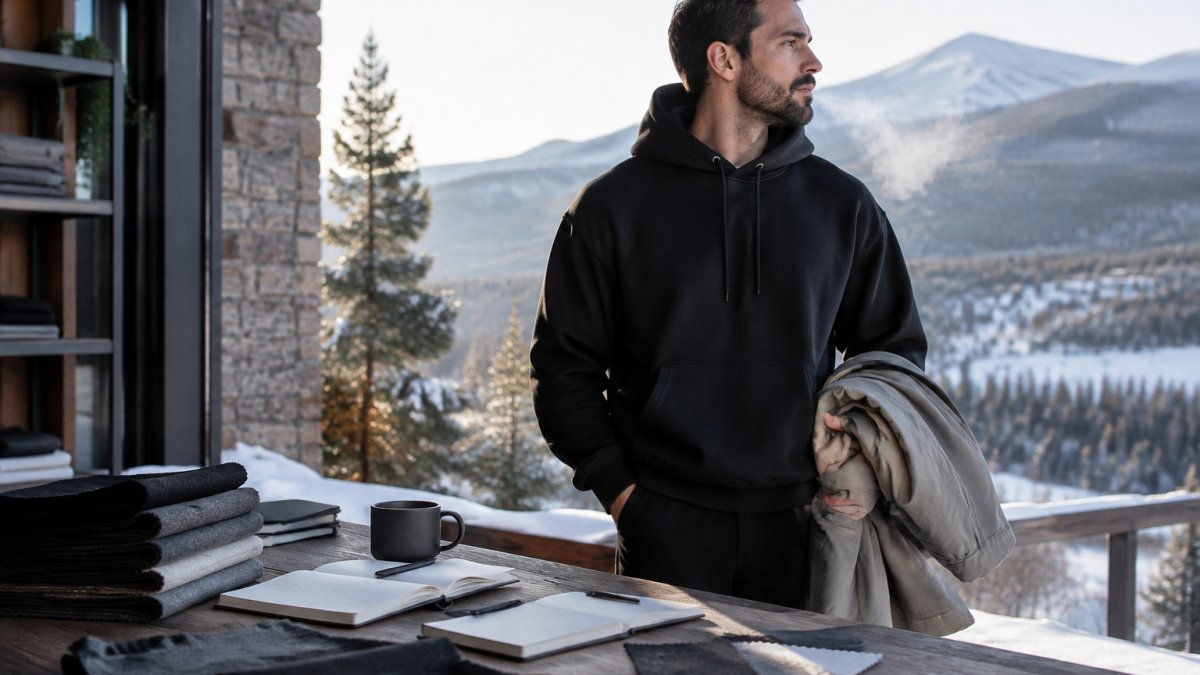
Dry cold (below freezing, low humidity). In dry cold, insulation matters more than wind resistance because the air itself holds little moisture.
Damp cold (near freezing, high humidity or wet snow). In damp cold, moisture management matters as much as insulation.
Outdoor activity (hiking, winter sports, physical work). When you are moving, you generate heat and sweat. A 250 to 300 GSM lightweight fleece as a base or mid-layer prevents overheating, and you add insulation only when you stop.
Indoor and transitional wear. If most of your winter is spent in heated spaces with short outdoor transitions, a 10 oz midweight cotton fleece or a 350 GSM French terry gives you enough warmth without overheating indoors.
Layering combinations. A heavier hoodie can serve as the outer layer on mild winter days and as a mid-layer under a coat when it is colder.
Watch out: layering a heavyweight hoodie under a slim coat can restrict movement and compress the insulation, which reduces warmth. Match the hoodie weight to the layer it will actually occupy, not to the coldest temperature you might theoretically face.
French Terry vs. Fleece Hoodie: Construction, Warmth and Seasonal Use
Fleece is brushed on one or both sides to trap air, which gives it strong insulation for its weight. French terry uses looped construction that feels smoother on the outside and holds up well at heavier weights.
Heavyweight French terry can also work well across seasons, so the warmest construction is not always the most versatile.
Midweight vs. Heavyweight Hoodie: Which Weight Fits Your Winter
Midweight hoodies suit most people in most places. They are comfortable, easy to layer and less bulky. Heavyweight hoodies suit anyone who needs serious warmth outdoors or wants a more substantial garment.
If you are unsure, start with a midweight piece for daily use and add a heavyweight hoodie for the coldest days. Many buyers find the two cover most of the winter between them. For a broader look at luxury men's hoodies, see Best Luxury Hoodies for Men 2026 as a starting point for comparing styles and prices.
Choosing Your Winter Hoodie: Shop the 430 GSM PrevailX Collection
If you have decided on 430 GSM French terry, the PrevailX collection gives you four colorways to choose from. The Graffiti Black Hoodie is a bold, refined option at $120.00. The Graffiti Crème Hoodie offers a clean, elevated canvas at the same price. For a warmer tone with leather accents, the Brown French Terry Heavy Weight Hoodie is priced at $135.00, and the Hunter Green Hoodie offers a darker, earthy shade at $135.00.

Pick the weight first, then the color. Every piece in this range is built for the cold months ahead.
Frequently Asked Questions
What is the best fabric for hoodies in winter?
For most winter conditions, a heavyweight knit around 400 GSM or more gives the best balance of warmth and structure. Heavyweight cotton fleece and French terry are the two most common choices. Fleece is a softer, air-trapping knit, while French terry offers a smoother exterior and a structured look. If you spend most of your time in very cold, windy weather, fleece is the warmer option. If you want a hoodie that also works in mild spring or fall weather, a heavyweight French terry is more versatile.
Are heavyweight hoodies actually better than midweight ones?
Heavyweight hoodies are better for cold weather, but they are not better for every situation. A heavier fabric provides more insulation and holds its shape longer, which suits outdoor winter wear and people who want a structured silhouette. Midweight hoodies, usually around 300 to 350 GSM, are easier to layer under a coat and more comfortable in indoor settings where you might overheat. The right choice depends on how cold your climate is and how much you plan to layer.
Is 10 oz heavy for a hoodie?
A 10 oz hoodie is considered midweight to heavyweight in most guides. A 10 oz hoodie is a substantial, midweight-to-heavyweight fabric. It is warm enough for most winter days in moderate climates and provides good durability. For very cold climates, heavier options or fleece construction may provide more warmth. Ounces measure weight per square yard, so the number reflects how much fabric is in the garment rather than how warm it will feel on its own.
How much GSM is good for a winter hoodie?
A good winter hoodie typically falls between 350 and 430 GSM. A 430 GSM French terry, such as the PrevailX Luxury Graffiti Black Hoodie, sits firmly in the heavyweight range. Lighter knits under 300 GSM are better suited to spring and fall. Remember that GSM measures fabric density, so two hoodies at the same GSM can still feel different depending on the knit structure and fiber content.


